Why Your Air Compressor Is Overheating?
5 common causes and how to fix them before a shutdown.
Keep Your Cool: 5 Common Reasons Your Air Compressor is Overheating
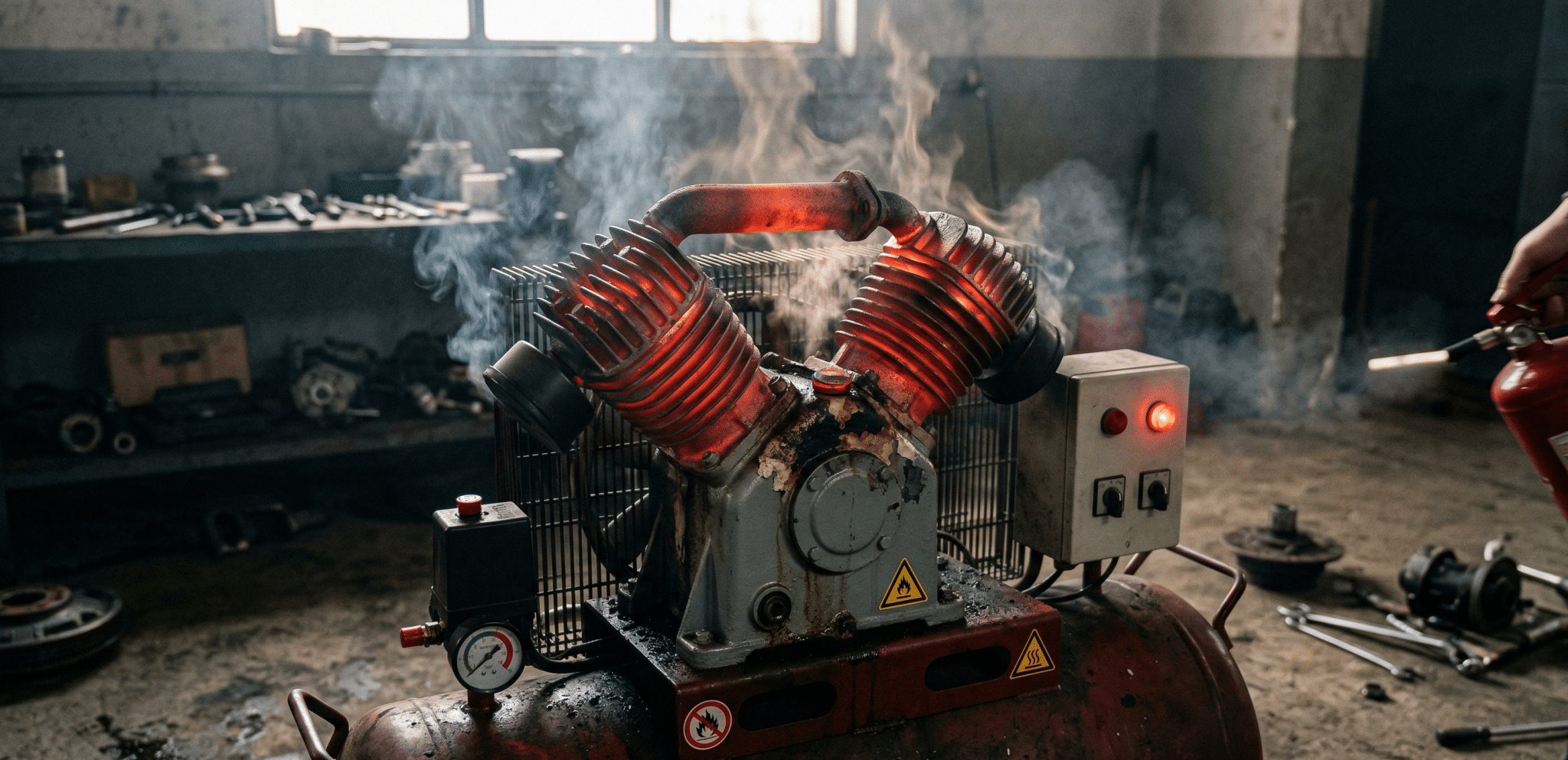
Nothing brings a productive workday to a grinding halt like an overheating air compressor. When the internal temperature spikes, most modern systems will trigger a safety shutdown to prevent catastrophic engine or element failure. While that safety feature saves your machine, the resulting downtime kills your bottom line.
If your compressor is running hot, you need to act before “warm” becomes “broken.” Here are the five most common culprits behind an overheating compressor.
Poor Ventilation and Ambient Temperature
Air compressors generate a massive amount of heat. If your compressor is tucked into a tight corner or a room without proper airflow, it’s essentially breathing its own exhaust. In the heat of summer, this becomes a recipe for an immediate shutdown.
- The Fix: Ensure there is at least 3 feet of clearance around all sides of the unit. If you’re indoors, use exhaust fans or ducting to pull hot air out of the room. If the ambient room temperature exceeds 40°C, you’re asking for trouble.
Low Oil Levels or Degraded Lubricant
Think of oil as the lifeblood of your compressor. It doesn’t just lubricate moving parts; it absorbs and carries heat away from the compression chamber. If your oil is low, or if it has thinned out and turned into “sludge” due to age, it can’t do its job.
- The Fix: Check your oil levels daily. If the oil looks dark or milky, it’s time for a change. Always use the manufacturer-recommended synthetic or reciprocating oil—standard motor oil will carbonize and ruin your valves.
Clogged Air Filters
If your compressor has to fight to pull air in, it works harder, runs longer, and gets hotter. A clogged intake filter acts like a mask, restricting the “breath” of your machine and forcing the motor into overdrive.
- The Fix: Inspect your air filters weekly, especially in dusty environments like woodshops or construction sites. If you can’t see light through the filter pleats, replace it immediately.
Dirty or Blocked Coolers (Heat Exchangers)
Most rotary screw compressors use an oil cooler (similar to a car radiator) to drop the temperature of the lubricant before it recirculates. If the fins of this cooler are coated in dust, grease, or debris, the heat has nowhere to go.
- The Fix: Use a compressed air wand to blow out the cooler fins regularly. Be careful not to bend the delicate fins. If the buildup is oily, you may need a specialized degreaser.
Internal Component Failure (Valves and Thermostats)
Sometimes the problem is internal. A broken thermal valve might be stuck in the “closed” position, preventing oil from reaching the cooler. Alternatively, worn-out internal valves can cause air to leak back into the cylinder, leading to “re-compression”—where the same air is compressed twice, doubling the heat.
- The Fix: If your oil levels are fine and the coolers are clean but you’re still overheating, it’s time for a professional diagnostic. Replacing a thermal valve is a quick fix; replacing a seized pump is not.
Don’t Wait for the Smoke
An overheating compressor is a “check engine light” for your entire operation. By staying on top of these five areas, you can extend the life of your equipment and keep your air flowing.
Is your compressor still running hot after trying these tips? Don’t risk a total system meltdown. Reach out to the experts at Compressors Now today to find the right replacement parts to get your system back to peak performance.