
Rotary Screw vs. Reciprocating
Compressor Now2026-06-08T13:25:16-07:00Which compressor technology fits your workflow?
Choosing an air compressor isn’t just about picking a machine that blows air; it’s about choosing the right equipment for your operation. At Compressors Now, we know that the wrong tech can lead to stalled projects, spiked energy bills, and early equipment failure.
The two heavyweights in the industry are Rotary Screw and Reciprocating (Piston) compressors. While they both get the job done, they do it in different ways. Here is how to figure out which one fits your specific needs.
The Piston Powerhouse: Reciprocating Compressors
Reciprocating compressors work like a car engine. A piston moves up and down inside a cylinder, trapping and compressing air.
Best For: Intermittent Use & High Pressure
If your workshop uses air in “bursts”—like an automotive shop using an impact wrench or a small woodshop running a nail gun, a reciprocating unit is often the choice.
- Initial Cost: Significantly cheaper to buy upfront.
- Pressure: Excellent at reaching high PSI (175+ PSI) for specialized heavy-duty tools.
- Maintenance: Simple, “garage-style” maintenance that most operators can manage themselves.
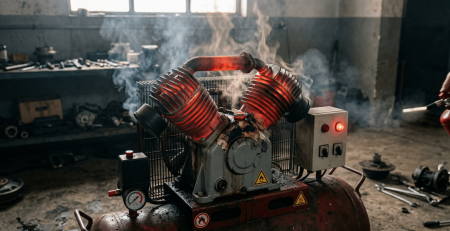
The Trade-off: They are loud, vibrate heavily, and usually have a 50% duty cycle. This means they need to rest for about 30 minutes for every 30 minutes they run to prevent overheating.
The Industrial Workhorse: Rotary Screw Compressors
Instead of pistons, these use two interlocking screws that rotate to compress air continuously.
Best For: Continuous Demand & Large Scale
If you run a production line, a sandblasting booth, or a facility where the air never stops flowing, the rotary screw is your choice.
- Duty Cycle: Designed for a 100% duty cycle. It can run 24/7 without needing a break.
- Efficiency: More energy-efficient for long run times, saving you thousands in electricity over the years.
- Noise: Quiet enough to be installed on the factory floor near workers without requiring a separate soundproof room.
The Trade-off: The upfront price tag is higher, and the maintenance (while less frequent) often requires specialized technicians to handle the oil separators and electronic controllers.
Comparison at a Glance
| Feature | Reciprocating (Piston) | Rotary Screw |
|---|---|---|
| Typical Duty Cycle | 20% – 50% (Intermittent) | 100% (Continuous) |
| Noise Level | Loud (80–90+ dB) | Quiet (60–75 dB) |
| Lifespan | 5,000 – 10,000 hours | 40,000 – 60,000+ hours |
| Heat Generation | High (180°C) | Low (80°C – 100°C) |
| Air Quality | Higher oil carryover | Cleaner, filtered air |
Which One Fits Your Workflow?
You should go with Reciprocating if:
- You have a small garage, or you are a mobile contractor.
- Yourair tools are used sporadically throughout the day.
- You are working with a limited startup budget.
- You need very high pressure (above 170 PSI).
You should go with Rotary Screw if:
- You run a manufacturing plant or a high-volume commercial shop.
- Your workflow requires a constant, steady “CFM”.
- Noise reduction is important for your work environment.
- You want a machine that will last 15+ years under heavy use.
Pro Tip: Never buy a compressor based on the sticker price alone. A rotary screw might cost more today, but its energy efficiency and 100% duty cycle often make it the cheaper option over a 5-year period for industrial users.